
Javier Acebo - Publicis

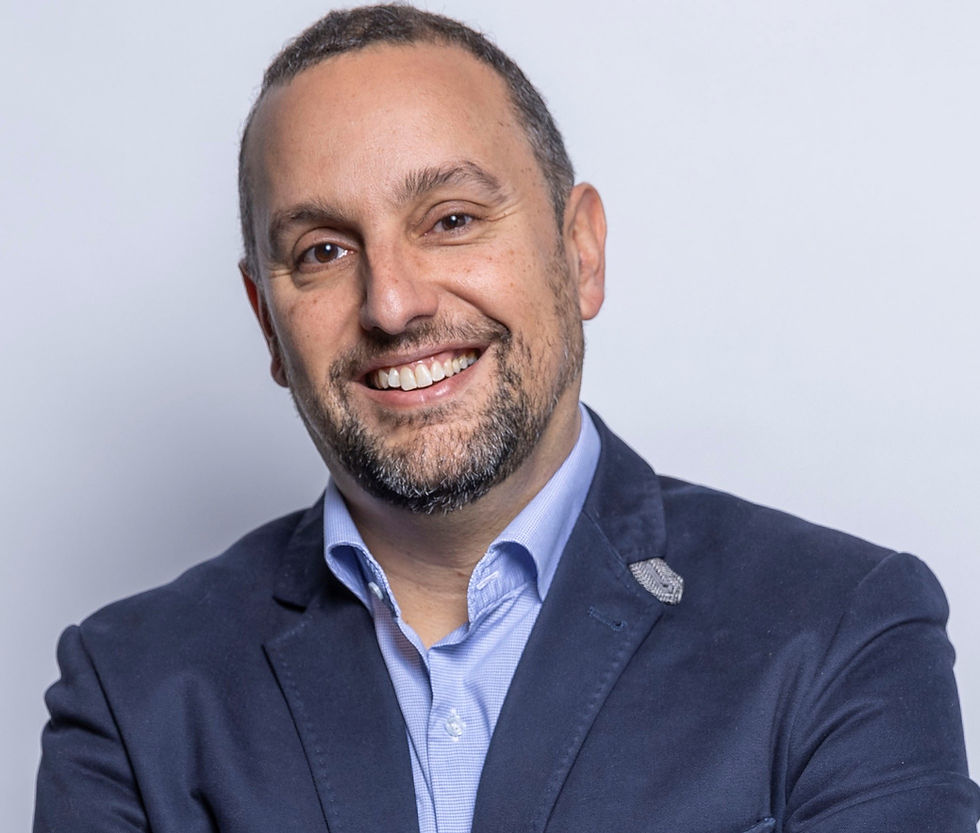
As marketing becomes increasingly data-rich and media continues to fragment, growing a brand has never been more complex. For Javier Acebo, Insight Director at Publicis, the answer lies not in choosing between short-term performance and long-term brand building, but in balancing both. Leading the insights function across Publicis’ media and creative agencies, Javier works closely with strategists to help brands make better decisions through research, measurement and interpretation. Throughout our conversation, he explains why measurement should be seen as an investment rather than a cost, why collaboration between disciplines is becoming a competitive advantage, and why human judgement remains indispensable in an AI-driven world.
Brand Growth Requires Balancing Short-term Sales with Long-term Brand Building
When discussing brand growth, Javier immediately points to the reality facing most marketers today. Despite years of evidence supporting long-term brand building, sales remain the KPI that receives the greatest attention. In today's environment, companies expect immediate commercial returns from every campaign, often leaving little room for investments whose impact takes longer to materialise.
However, Javier believes this short-term focus creates a dangerous imbalance. While sales ultimately determine success, they are the outcome of several other factors that require continuous investment. Brand awareness, consideration, positive brand perception and mental availability all contribute to future sales, even if their effect is less visible in the short term. "Everyone wants to run a campaign, invest three euros and sell more the same day. But if you stop investing in making your brand known and relevant, you make future growth much harder."
Rather than choosing one over the other, Javier argues that marketers need to manage both horizons simultaneously. Performance marketing remains essential, but it should never come at the expense of building a brand that consumers remember and actively choose over time. As he puts it: "What are you offering consumers beyond a promotion? What are you giving them that makes your brand stay in their minds and makes them buy it again tomorrow?"
"If you stop investing in making your brand known and relevant, you make future growth much harder."
Measurement is not a Cost - it is part of the Investment
One of Javier's strongest convictions is that too many organisations still treat research as an optional expense rather than a necessary part of marketing investment. While companies may spend millions on communication campaigns, they often hesitate when asked to allocate a small percentage of that budget to understanding whether those campaigns actually worked.
For Javier, that logic makes little sense. Measuring campaign reach, media effectiveness and consumer response reduces risk and helps brands continuously improve their decision-making. "When you're investing millions in communication, not spending a little on measuring whether it's working creates enormous risk."
At Publicis, measurement spans multiple levels. Campaign reach and frequency provide an initial understanding of whether communication reached the intended audience, while econometric modelling and client-specific tracking help assess commercial impact. Regardless of the methodology, Javier believes every campaign deserves evaluation. "Knowing what works, why it works and what doesn't work is essential. One day, spending on research should simply be seen as part of investing in communication."
"Knowing what works, why it works and what doesn't work is essential. One day, spending on research should simply be seen as part of investing in communication."
Reach, Personalisation and Insights must Work Together
According to Javier, technological advances have dramatically improved marketers' ability to personalise communication. Brands can increasingly identify consumers who are actively considering a purchase and tailor messages accordingly. But he warns against interpreting this as an argument for targeting ever smaller audiences.
Instead, he believes successful communication combines broad reach with intelligent prioritisation. Brands should continue building mental availability across large audiences while using data to increase relevance for consumers who are most likely to convert. "It's not about reducing reach. It's about reaching as many people as possible, but with a clear order of priority."
The same philosophy applies to consumer insights. Data alone rarely creates competitive advantage. What matters is the interpretation behind the numbers. Rather than accepting statistics at face value, Javier encourages marketers to ask deeper questions that uncover why behaviour changes. "An insight isn't that 30% of people watch a TV channel. The insight is understanding why that audience changed. That's where the real value appears."
"It's not about reducing reach. It's about reaching as many people as possible, but with a clear order of priority."
Breaking Down Silos to Create one Strategy
Throughout the conversation, one theme repeatedly returns: collaboration. Javier believes too many organisations still operate in functional silos, where research, media, creative and strategy teams each hold valuable information but fail to share it effectively. He has experienced situations where one department commissioned research without realising another department within the same company had already answered the question. For him, this reflects an outdated belief that information creates power. In reality, organisations become stronger when insights are shared widely and everyone works towards the same commercial objective.
Publicis addresses this through its "Power of One" philosophy and its integrated One Strategy model, where media strategy, creative strategy, digital strategy and insights operate together instead of separately. "There is only one strategy. Media, creativity, digital and research should all be expressions of that same strategy."
As media channels continue to fragment, Javier also sees a growing need to balance specialist expertise with broader strategic leadership. Specialists remain essential, but organisations also need people capable of connecting disciplines and seeing the bigger picture. That holistic view, he believes, will become increasingly valuable as marketing grows more complex.
AI can Accelerate Marketing, but Human Judgement Remains Essential
Artificial intelligence is already transforming the way brands and agencies operate, but Javier approaches its potential with cautious optimism. Within Publicis, AI is already improving productivity across research, planning and creative work. Tasks that once required hours can now be completed within minutes, allowing teams to focus more time on higher-value thinking.
At the same time, he warns against overestimating AI's capabilities. The technology performs well when supporting experienced professionals, but becomes far less reliable when users lack the expertise to evaluate its output. "The more I work with AI, the more useful it becomes — and the more I realise how limited it still is."
Looking ahead, Javier believes agencies will increasingly act as strategic partners that integrate multiple disciplines rather than narrow specialists. Their role should be helping brands navigate complexity, connect expertise and make better long-term decisions. His advice for today's CMOs reflects that same mindset: don't simply repeat what has worked before. Be prepared to challenge assumptions and take calculated risks. "If you believe there's a better way to reach people, try it. Just because something worked before doesn't mean it will work again."
"If you believe there's a better way to reach people, try it. Just because something worked before doesn't mean it will work again."